


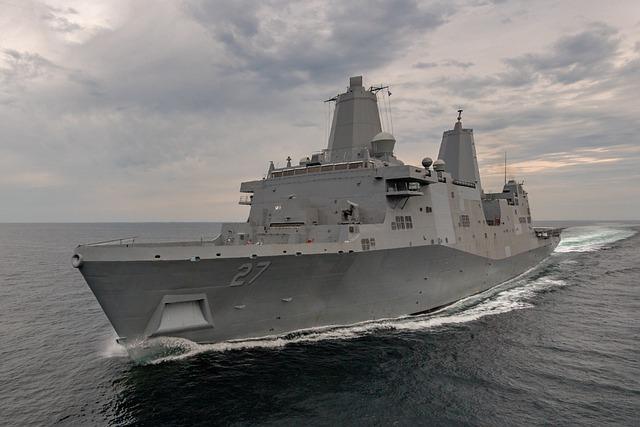
The Arleigh Burke-class guided-missile destroyer USS Lenah Sutcliffe Higbee (DDG 123) has returned to its homeport of San Diego following a successful deployment, the U.S. Navy announced. The ship’s arrival marks the completion of an operational period that included multinational exercises, strategic patrols, and integrated operations with joint and allied forces. As sailors reunited with families on the pier, Navy leaders highlighted the destroyer’s role in advancing maritime security and underscored the legacy of its namesake, Navy nursing pioneer Lenah Sutcliffe Higbee.
USS Lenah Sutcliffe Higbee completes milestone deployment with successful San Diego homecoming
Guided-missile destroyer USS Lenah Sutcliffe Higbee (DDG 123) marked the conclusion of its first major operational cruise as it crossed the harbor and moored at Naval Base San Diego to a pier lined with families, shipmates and local officials. The warship’s deployment, spanning multiple combatant commands, showcased integrated air and missile defense, maritime security operations and joint exercises with allied navies. During the deployment, the crew executed high-tempo watch rotations, sustained long-range presence missions and participated in coalition task group operations designed to reinforce freedom of navigation and regional stability.
- Homeport: Naval Base San Diego
- Ship type: Arleigh Burke-class guided-missile destroyer
- Primary missions: Air defense, surface warfare, maritime security
- Key focus: Integration with allied and partner fleets
| Deployment Highlight | Location | Focus Area |
|---|---|---|
| Carrier strike group operations | Pacific and Indo-Pacific | Air and missile defense |
| Multinational exercises | Western Pacific | Allied interoperability |
| Maritime security patrols | Key sea lanes | Presence and deterrence |
As the ship moored in San Diego, Sailors disembarked to an emotional scene of reunions that underscored the human dimension of the deployment’s success. Command leadership noted that the destroyer’s performance validated its advanced combat systems and the crew’s readiness for complex operations, while reinforcing the legacy of its namesake, Navy Nurse Corps pioneer Lenah Sutcliffe Higbee. The return also signaled a reset period for maintenance, training and certifications as the crew prepares for future tasking in support of fleet commanders and ongoing global commitments.
Crew readiness and training advances position destroyer for expanded Indo Pacific missions
As the guided-missile destroyer completed her latest deployment, commanders emphasized that the most significant upgrade was not in steel or silicon, but in the crew’s sharpened proficiency. Sailors rotated through an intensive schedule of integrated live-fire events, synthetic simulations and watchteam drills designed to mirror high-end conflict scenarios across the Western Pacific. Training pipelines were refined to stress rapid decision-making in congested sea lanes, electromagnetic maneuver in contested spectra, and seamless coordination with allied maritime operations centers. To support this, embarked warfare commanders relied on a blended learning environment that combined shore-based virtual trainers with onboard rehearsal systems, allowing crews to reset and re‑challenge themselves between underway evolutions.
These efforts produced a force package calibrated for sustained operations alongside carrier strike groups, expeditionary strike groups and regional partners. On return to San Diego, leadership highlighted several core readiness gains:
- Multi-domain watchstanding integrated air, surface, subsurface and cyber inputs into a single combat picture.
- Expanded certification tiers in ballistic missile defense, anti-submarine warfare and strike warfare were achieved ahead of schedule.
- Interoperability drills with coalition navies increased cross-deck familiarization and common tactics, techniques and procedures.
- Resilience training focused on fatigue management, damage control and casualty response during prolonged operations.
| Training Focus | Operational Impact |
|---|---|
| Aegis tactical refresh | Faster track identification and threat engagement |
| ASW scenario runs | Improved detection in complex acoustic environments |
| Coalition comms drills | Quicker coordination with regional partners |
| Damage-control labs | Shorter response time to shipboard casualties |
Modernization and maintenance plans at Naval Base San Diego to enhance long term combat capability
As the destroyer completes its latest deployment cycle, planners at Naval Base San Diego are aligning her pier-side period with a broader infrastructure push designed to keep the Pacific Fleet at peak readiness. Shipyard teams and base engineers are coordinating a phased schedule of work that couples traditional hull, mechanical and electrical upkeep with targeted upgrades to sensors, cyber defenses and power management systems. These efforts are part of a basin-wide initiative that, according to officials, aims to reduce maintenance backlogs while giving crews faster access to cutting-edge warfighting tools. Early concept plans call for optimized dry-dock rotations, expanded technical support facilities and upgraded waterfront utilities calibrated to the energy demands of next-generation destroyers and unmanned platforms.
Under the emerging framework, commanders and civilian project managers are focusing on a series of priority actions designed to keep ships like the returning destroyer fully mission-capable across the spectrum of operations:
- Waterfront infrastructure upgrades, including improved pier services, expanded secure communications lines and hardened power grids.
- Lifecycle sustainment programs that synchronize depot-level overhauls with at-sea trials and crew training pipelines.
- Digital integration of maintenance data, using predictive analytics to anticipate component failures and shorten repair timelines.
- Resilience measures such as enhanced force protection systems and redundancy in critical base support functions.
| Focus Area | Near-Term Goal | Combat Effect |
|---|---|---|
| Pier Modernization | Support multiple advanced DDGs | Faster surge readiness |
| Maintenance Analytics | Cut downtime for key systems | Higher on-station rates |
| Cyber Hardening | Secure ship-base networks | Improved C2 resilience |
| Training Integration | Align work with crew drills | Stronger fight-tonight posture |
Recommendations for sustaining family support and community engagement after deployment return
As families welcome Sailors home to San Diego, commands and local organizations are coordinating efforts to keep support systems active beyond the initial homecoming. Spouses’ clubs, ombudsman networks and child-focused programs are being encouraged to maintain regular touchpoints through coffee gatherings, youth activities and peer-led discussion groups. Fleet and Family Support Center staff report that consistent, low-pressure engagement helps normalize the transition, allowing Sailors and loved ones to address reintegration challenges before they escalate. Local partners, including schools and veterans’ groups, are also being briefed on deployment-related stressors to ensure that services remain responsive and accessible.
- Weekly family meetups hosted at on-base community centers
- Hybrid town halls combining in-person and virtual attendance
- Peer mentorship linking new Navy families with experienced sponsors
- Coordinated volunteer projects connecting crew members, families and local nonprofits
| Program | Focus | Frequency |
|---|---|---|
| Blue & Gold Family Forums | Updates, Q&A with ship leadership | Monthly |
| Harbor Neighbor Network | Community partnerships, volunteering | Quarterly |
| Homeport Resilience Circles | Peer support, stress management | Biweekly |
Command leadership is emphasizing long-term engagement by integrating family perspectives into shipboard planning cycles and post-deployment reviews. Public affairs teams are highlighting success stories from these initiatives to encourage broader participation across the waterfront. In coordination with city officials and veterans’ advocates, the ship’s return is being used as a catalyst to reinforce San Diego’s role as a sustained support hub for Navy families, not only during deployment but throughout the entire sea-duty tour.
Wrapping Up
As USS Lenah Sutcliffe Higbee returns to San Diego, the destroyer resumes its role at the forefront of the Navy’s Pacific operations, reflecting both the service’s enduring traditions and its evolving mission. The ship’s homecoming underscores the continued importance of forward-deployed naval forces in promoting security, strengthening alliances, and safeguarding U.S. interests at sea.
With its crew back alongside the San Diego waterfront, the Navy turns its attention to sustaining readiness, integrating lessons learned, and preparing Lenah Sutcliffe Higbee for future tasking in an increasingly dynamic maritime environment.