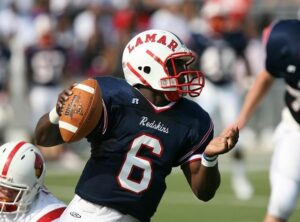


Right-hander Michael King is heading back to San Diego on a lucrative new deal, agreeing to a reported five-year, $75 million contract that signals the Padres’ continued commitment to reshaping their rotation. The agreement, first reported by Sports Illustrated, marks a pivotal moment for both player and club: King, who emerged as a breakout starter after arriving from New York, now secures long-term stability, while the Padres lock in a versatile arm at the heart of their pitching staff. As San Diego recalibrates following a season of high expectations and mixed results, King’s return underscores the organization’s belief that he can be a foundational piece in its pursuit of sustained contention.
Michael King Explains Why the Padres Were His First Choice in Free Agency
Speaking with reporters after finalizing his five-year, $75 million pact, King said the decision crystallized quickly because San Diego offered more than just money. The right-hander pointed to the organization’s pitching infrastructure, the way the coaching staff tailored game plans to his strengths during last season’s breakout, and the front office’s clear vision for his role at the top of the rotation. He also referenced the trust built during his transition from multi-inning reliever to full-time starter, describing the Padres as the first club that “fully committed” to that version of him and backed it up with a long-term offer. That combination of opportunity and belief, King indicated, made other suitors feel like “backups” rather than real alternatives.
King also highlighted non-financial factors that steered him toward a return, underscoring a fit that extends beyond the clubhouse. He cited the collaborative atmosphere inside the pitching lab, the comfort his family felt in San Diego, and the chance to anchor a rotation built to contend in the National League West. According to King, the Padres laid out a detailed performance and workload plan during negotiations, convincing him that the club’s long-term investment came with a structure designed to keep him healthy and effective deep into his 30s.
- Key factors in King’s decision:
- Organizational commitment to him as a front-line starter
- Advanced pitching development and analytics support
- Comfort with coaching staff and clubhouse culture
- Family’s preference for San Diego market and lifestyle
| Factor | Impact on Decision |
|---|---|
| Defined Ace Role | Primary on-field reason to re-sign |
| Pitching Infrastructure | Confidence in sustaining 2024 breakout |
| Long-Term Security | Five-year term aligned with career goals |
| City & Family Fit | Gave Padres edge over other bidders |
Inside the Five Year 75 Million Contract Structure and What It Means for San Diego’s Payroll
The five-year commitment, reported at $75 million, gives the Padres a clear financial roadmap while signaling that Michael King has graduated from swingman to cornerstone. Structurally, league sources indicate the deal is expected to be front-loaded with performance incentives, a design that protects San Diego’s flexibility in the later years of the contract. That approach allows the club to absorb higher costs while King is in his prime years, then pivot payroll space toward extensions for emerging homegrown talent. Key features likely include:
- Escalating base salaries tied to games started and innings thresholds
- Bonuses for Cy Young voting points and postseason appearances
- Limited no-trade protection that preserves front office maneuverability
- Club-friendly deferrals to smooth annual cash flow
| Season | Est. AAV Impact | Rotation Role |
|---|---|---|
| 2025 | $12M-$14M | No. 2-3 starter |
| 2026 | $14M-$16M | Workhorse anchor |
| 2027-2029 | $15M range | Veteran stabilizer |
From a payroll perspective, the agreement slots in below the club’s highest earners, creating a mid-tier pitching pillar that bridges superstar contracts and pre-arbitration contributors. That balance is crucial as San Diego weighs future decisions on its core: maintaining competitive depth without pushing too far past competitive balance tax thresholds. Internally, the Padres view King’s contract as a template for how to pay for proven production without surrendering long-term agility, a model that could shape upcoming negotiations with other arms. In practice, the deal gives the front office flexibility to:
- Layer in short-term veteran deals around a cost-known rotation piece
- Control luxury tax exposure with predictable annual figures
- Lock in innings while prospect arms are staggered into the big-league staff
- Rebalance spending from offense to pitching as the roster evolves
How King’s Evolving Pitch Mix Could Transform the Padres Rotation in 2025
San Diego’s investment in Michael King hinges on more than his durability; it’s a wager on a shifting arsenal that grew more sophisticated over the past two seasons. Team analysts believe incremental tweaks to his sinker-slider-changeup triangle could turn him from a versatile swingman into a stabilizing No. 2-type presence behind the Padres’ front-line arm. Early internal projections highlight a strategic emphasis on tunneling the two-seam sinker with a harder sweeper, while the changeup, once a show-me pitch, is expected to be featured more often against left-handed heavy lineups in the NL West. The organization’s pitching lab has already begun modeling scenarios where King’s usage leans into weak contact instead of pure swing-and-miss, a shift that could extend his outings deeper into games.
Club officials outline several areas of focus for 2025:
- Increased sweeper usage to exploit horizontal movement against power bats.
- Refined changeup grip designed to miss barrels late in counts.
- Occasional four-seam elevation to change hitters’ eye levels after sinkers.
- Efficiency-first pitch sequencing aimed at consistent six- and seven-inning starts.
| Pitch Type | 2024 Usage | Projected 2025 Usage | Primary Purpose |
|---|---|---|---|
| Sinker | 38% | 34% | Early-count ground balls |
| Sweeper/Slider | 26% | 30% | Back-foot weapon vs. righties |
| Changeup | 15% | 20% | Neutralizing left-handed bats |
| Four-Seamer | 12% | 10% | High-zone put-away pitch |
Internally, the Padres view this recalibrated mix as a template for the rest of the staff, particularly for younger arms expected to follow King’s lead in attacking the zone with intent rather than velocity alone. If these adjustments hold, San Diego’s rotation could shift from matchup-dependent to structurally stronger, with King’s evolving repertoire functioning as both a nightly blueprint and a barometer of how far this staff can go in 2025.
What the Padres Must Do Around King to Maximize Their Investment and Contend in the NL West
San Diego’s long-term bet on King only pays off if the club fortifies the roster with the same conviction. That starts with insulating him in the rotation: the Padres need at least one more reliable mid-rotation arm to keep him from being overexposed at the top of the staff, plus a deep, flexible bullpen that can absorb the innings he won’t be allowed to throw early in the deal. Equally critical is reinforcing the defense behind him. King’s success is tied to weak contact and precision, making upgraded infield range, outfield jumps and game-planned positioning essential. Internally, that means a sharper collaboration between the analytics group, pitching coach and catchers on pitch usage, sequencing and matchup-driven game plans.
On the roster-building front, club officials know King alone doesn’t close the gap on the Dodgers and Giants. San Diego must pair his prime years with a balanced offense that lengthens the lineup and consistently supports his starts. That could mean lower-cost but high-OBP bats, an emphasis on positional versatility, and aggressively promoting impact prospects when they’re ready, not when the service-time calendar says so. The front office also needs financial discipline around the contract, funneling savings from past payroll cuts into targeted additions rather than star-chasing for headlines. The blueprint looks less like a splashy superteam and more like a deep, adaptable 26-man roster built to keep King’s outings meaningful into September.
The Conclusion
As the ink dries on King’s four-year, $75 million agreement, both pitcher and club find themselves at a pivotal juncture. San Diego is banking on King’s late-season emergence as a frontline starter, while King is embracing the expectations that come with a prominent role in a contending rotation.
If his remarks are any indication, King is not simply returning to familiar surroundings; he is stepping into a new chapter defined by higher stakes and louder demands. For the Padres, his arrival is more than a headline deal – it is a clear statement of intent in a tightly contested National League race. How far that ambition carries them will depend, in no small part, on whether King can turn this lucrative homecoming into sustained success on the mound.